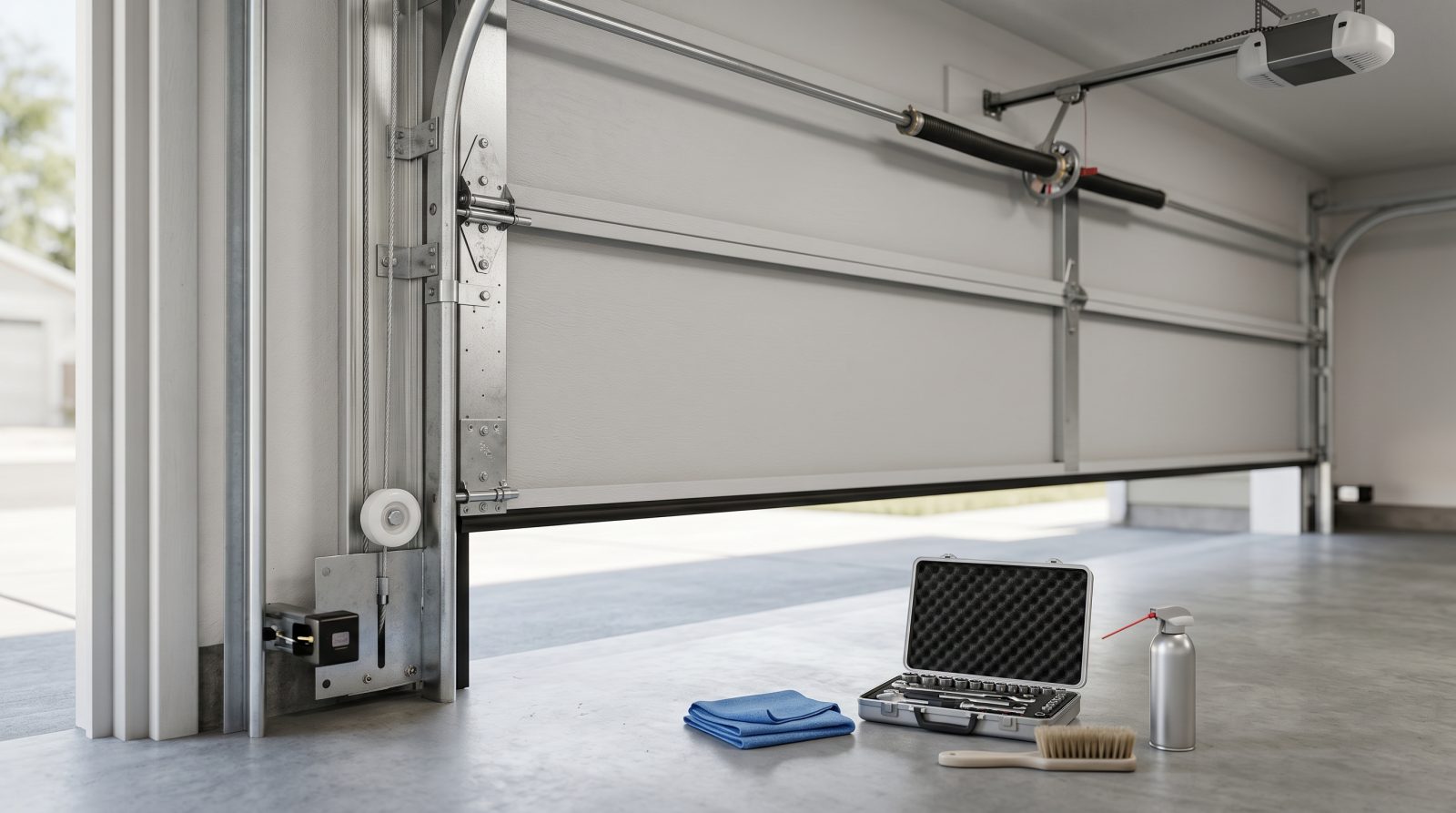
Why San Diego Garage Doors Need a Different Maintenance Routine
Most garage door maintenance advice you'll find online is written for parts of the country with harsh winters, where freezing temperatures, road salt, and ice are the main enemies. San Diego has almost none of that, which is great news for door longevity. Our doors don't get the thermal shock that cracks panels or the freeze-thaw cycles that destroy weather seals in a single season. If you've moved here from a colder climate, your door will genuinely last longer with less drama.
But our region has its own specific stressors that quietly shorten the life of springs, rollers, and hardware. Homes in coastal communities like La Jolla, Pacific Beach, Ocean Beach, Point Loma, Coronado, Encinitas, and Carlsbad sit in salt-laden marine air that accelerates rust and corrosion on steel components, even when the door looks fine from across the driveway. Inland and East County areas like El Cajon, Santee, Poway, and the canyon-adjacent neighborhoods deal with fine, gritty dust that works its way into roller bearings and track joints. And nearly every door in the county takes a daily beating from strong, direct sun that bakes finishes and dries out the rubber bottom seal.
Understanding which of these conditions affects your home is the first step. A door three blocks from the beach needs more attention to corrosion than one in a shaded Mira Mesa cul-de-sac. Tailor the checklist below to where you actually live.
- Coastal homes (La Jolla, PB, OB, Point Loma, Coronado, North County beaches): prioritize corrosion checks and lubrication of metal parts
- Inland and East County homes (El Cajon, Santee, Poway, Lakeside): prioritize keeping tracks and rollers clear of fine dust and grit
- Sun-exposed, west-facing doors anywhere: watch the rubber bottom seal and any painted or composite surfaces for drying and cracking
- Older homes in neighborhoods like North Park, Kensington, and La Mesa: hardware can loosen over decades of use and benefits from a yearly tighten-up
The Quick Monthly Look and Listen (5 Minutes)
You don't need tools or technical knowledge for the most valuable maintenance habit there is: paying attention. Once a month, stand inside the garage and watch a full open-and-close cycle with the lights on. Your door tells you when something is wrong long before it actually fails, and catching a problem early is the difference between a quick adjustment and an emergency.
Listen for new sounds. A healthy door is reasonably quiet and smooth. Grinding, scraping, squealing, popping, or a loud bang during operation all point to specific issues, dry rollers, a track problem, or in the case of a sharp bang, possibly a broken spring. Watch the movement too. The door should travel evenly and stay level, not jerk, hesitate, or look crooked as it rises.
This monthly habit costs five minutes and catches the overwhelming majority of developing problems while they're still cheap and safe to fix. Make it a routine, the same week you do another monthly chore, so you actually remember to do it.
- Watch a full open and close cycle and look for jerky, uneven, or crooked movement
- Listen for grinding, scraping, squealing, or popping that wasn't there before
- A single loud bang from the garage, even with no obvious damage, often means a broken torsion spring, stop using the door and call a pro
- Check that the door seals to the floor evenly across its full width with no daylight gaps
- Glance at the cables on each side; if you see fraying, rust, or a strand sticking out, do not operate the door and call for service
Spring and Summer: Lubrication, Cleaning, and Salt-Air Defense
As the marine layer burns off and you head into the dry season, this is the ideal time for the hands-on maintenance most homeowners skip. The single most impactful DIY task is lubrication. Properly lubricated moving parts run quieter, draw less strain on the opener motor, and last dramatically longer. Use a garage-door-specific lubricant, a silicone or lithium-based spray, and never use WD-40, which is a degreaser and cleaner, not a long-term lubricant, and will actually attract the dust that's so common here.
Start by wiping the tracks clean with a dry cloth, do not lubricate the tracks themselves, they should be clean and dry so rollers grip properly. Then apply a light coat of lubricant to the hinges, the roller stems and bearings, the springs, and the bearing plates. Wipe away any excess so it doesn't drip and collect grit. For coastal homes, this is also your corrosion defense: a thin protective film on metal parts genuinely slows the salt-air rust that eats hardware near the beach. Inland homeowners get a different benefit, fresh lubricant after a dusty stretch keeps grit from grinding inside the rollers.
Summer is also when the rubber bottom seal takes the most punishment from sun and heat. Inspect it along the full width of the door. A seal that's cracked, brittle, flattened, or letting in light, dust, or critters has done its job and is ready for replacement. Keeping a good seal also helps moderate the temperature in garages that double as workshops, gyms, or storage in our warm months.
- Use silicone or lithium-based garage door lubricant; avoid WD-40, which attracts dust and isn't a true lubricant
- Lubricate hinges, rollers, springs, and bearing plates, then wipe off the excess
- Wipe tracks clean and dry; never lubricate the inside of the tracks
- Coastal homes: a light protective film on metal parts is your best defense against salt-air corrosion between professional service visits
- Inspect the rubber bottom seal for sun damage, cracking, or gaps and plan to replace it when it's brittle
Fall and Winter: Hardware Tightening and Weather Readiness
San Diego winters are mild, but they bring our rainy season and the heaviest stretch of marine moisture, so fall is the right time to button things up. Over hundreds of open-and-close cycles a year, the constant vibration gradually loosens the bolts and screws that hold the door's hardware together. Once a year, go around with a socket wrench or screwdriver and snug up the roller brackets, hinges, and the bolts mounting the track to the wall and ceiling. Be firm but don't overtighten, you want them secure, not stripped.
Pay particular attention to the bottom-bracket bolts and any fastener near a torsion spring or cable. These are under extreme tension. If a bracket near the bottom of the door feels loose, do not attempt to tighten or remove it yourself, the bottom brackets are connected to the lift cables and springs and can cause serious injury. Note it and have a professional handle it. Tightening the upper hinges, mid-door brackets, and track-mounting bolts is safe DIY territory.
With our rain arriving in winter, confirm the bottom seal and any side and top weatherstripping are intact so water and the wind-driven moisture off the ocean stay outside. A well-sealed door protects whatever you store in the garage and keeps the space from getting damp during a wet stretch. This is also a smart time to clear leaves and debris from the bottom track area so the door closes cleanly.
- Tighten roller brackets, hinges, and track-mounting bolts once a year; firm, not overtightened
- Never DIY anything attached to the bottom brackets, torsion springs, or cables, these are under high tension and cause serious injuries
- Confirm the bottom seal and any side or top weatherstripping are intact before the rainy season
- Clear leaves, dirt, and debris from the bottom track so the door closes flush
- If hardware keeps loosening quickly or you spot bent tracks, schedule a professional inspection
Safety Tests Every Homeowner Should Run Twice a Year
These are the most important checks on the entire list because they're about safety, not just smooth operation. Modern garage door openers have two built-in safety systems that are required to protect children, pets, and your vehicle, and both can drift out of adjustment or fail over time. Test them every spring and fall. They take about two minutes combined.
First, the auto-reverse mechanism. With the door fully open, lay a solid object like a roll of paper towels or a piece of 2x4 lumber flat on the floor in the door's path, then close the door using the wall button or remote. The moment the door touches the object, it should stop and reverse direction. If it doesn't, or if it keeps pushing down, the safety system needs adjustment or repair and the door is not safe to use normally until it's fixed.
Second, the photo-eye sensors, the small units mounted a few inches off the ground on each side of the door. Start the door closing, then wave a broom or your foot through the beam near the floor. The door should immediately stop and reverse. If it doesn't, the sensors may be misaligned, dirty, or failing. In our dusty inland areas the lenses get grimy and stop working, often a gentle wipe with a soft cloth restores them. Also test the manual release cord, the red handle, so you know how to disengage the door by hand in a power outage, just do it only when the door is fully closed.
- Auto-reverse test: door should reverse the instant it contacts an object on the floor
- Photo-eye test: door should stop and reverse when you break the beam near the floor while closing
- Wipe the photo-eye lenses clean, dust is a common cause of failure in inland and canyon-adjacent neighborhoods
- Locate and test the manual release (red handle) so you can open the door by hand during a power outage, only with the door closed
- If either safety system fails its test, stop using the door normally and get it serviced promptly
What to Leave to a Mobile Professional
Knowing what not to touch is just as important as knowing what to maintain. A handful of garage door components store enormous amounts of energy and are genuinely dangerous to service without the right training and tools. Garage door springs, both torsion springs above the door and extension springs along the tracks, are under extreme tension and are the single most common cause of serious DIY garage door injuries. The lift cables that work alongside them are equally hazardous. These are never homeowner jobs.
Likewise, leave bent or misaligned tracks, off-track doors, broken or frayed cables, and any panel or section replacement to a professional. Opener problems beyond a dead remote battery, motor issues, logic-board faults, or persistent safety-sensor failures that cleaning doesn't fix, also warrant a trained eye. Attempting these without experience usually makes the repair more expensive and risks injury.
Because we're a mobile service, getting professional help in San Diego doesn't mean hauling anything anywhere. We come to your driveway anywhere across the county, from the coast to El Cajon to North County, with the tools and parts to handle the jobs that aren't safe to DIY. A good rhythm is to run the seasonal homeowner checklist yourself and book a professional inspection roughly once a year, or sooner if your monthly look-and-listen turns up something concerning. If you're not sure whether something is a DIY task or a pro job, the safe answer is always to ask, call or request a free quote and we'll point you in the right direction.
- Never DIY: torsion or extension springs, lift cables, or anything under high tension
- Call a pro for: off-track doors, bent tracks, frayed or broken cables, and panel or section replacement
- Call a pro for opener faults beyond a remote battery, motor, board, or persistent sensor failures
- Book a professional inspection about once a year, or sooner if a monthly check turns up grinding, gaps, or jerky movement
- As a mobile, we-come-to-you service, we handle the unsafe jobs in your driveway anywhere in San Diego County