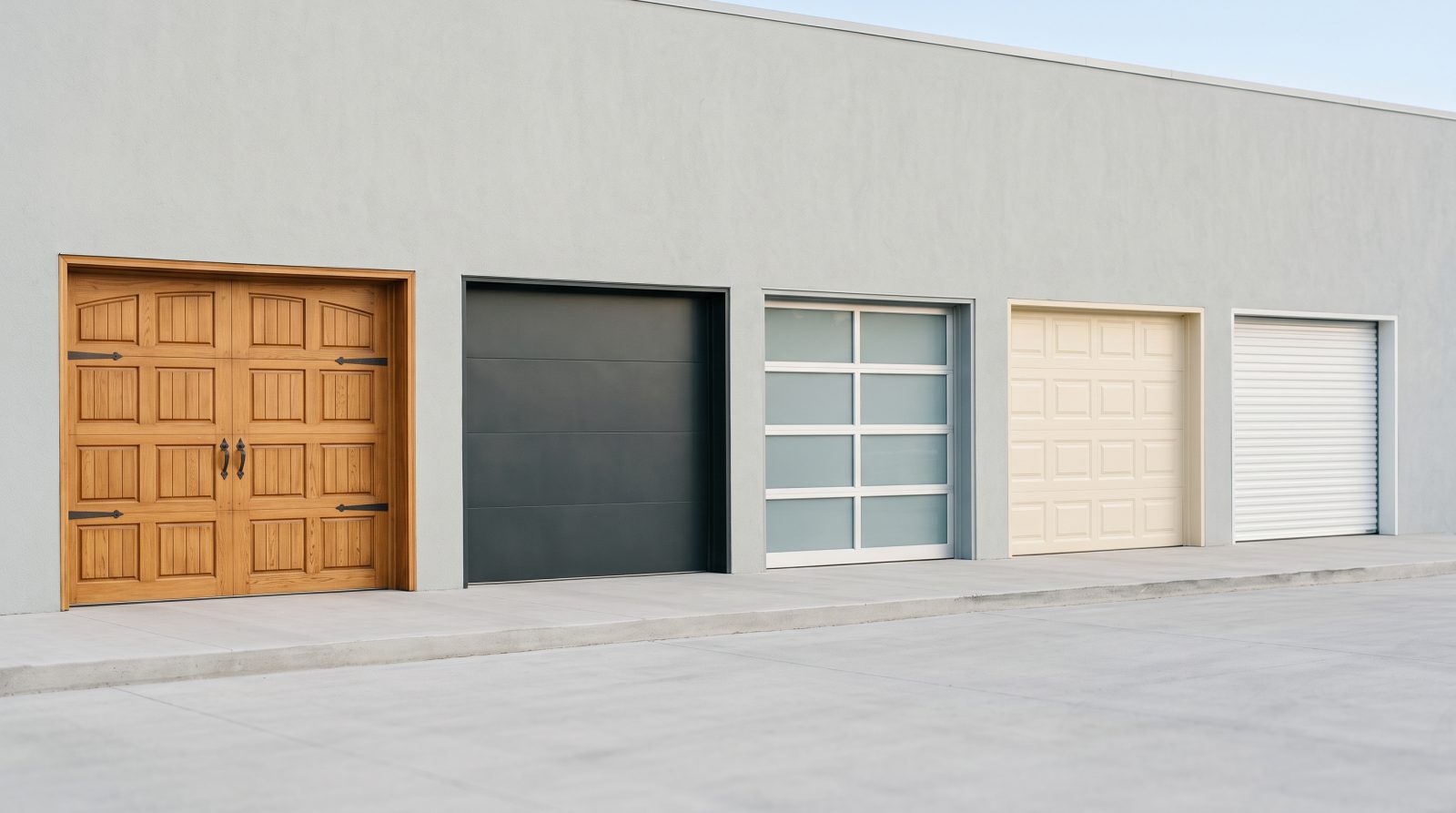
Start With Material: Steel, Aluminum, Wood, and Composite in San Diego's Climate
Material is the decision that drives everything else, because it sets your maintenance, your durability near the coast, and the ceiling on your budget. San Diego is not one climate. A home in Point Loma, Ocean Beach, or La Jolla lives in salt-laden marine air that corrodes thin metal and chews through cheap hardware, while a home inland in Santee, Poway, or El Cajon bakes under intense, fade-driving sun for most of the year. The door that's ideal three miles from the water is often the wrong call three miles inland, and matching the material to your microclimate is the single biggest favor you can do your future self.
Steel is the most common choice for good reason: it's strong, available in nearly any style, and the most budget-friendly per square foot. The catch near the coast is corrosion. If you're west of the 5 or anywhere you can smell the ocean, look for a quality factory finish, galvanized or coated steel, and stainless or corrosion-resistant hardware, then plan on a rinse now and then. Aluminum with glass panels gives that clean, modern, semi-transparent look you see in newer La Jolla and Carmel Valley builds; it won't rust, but it dents more easily and the large glass sections cost more. Real wood is gorgeous on a Craftsman in Kensington or a Spanish home in Mission Hills, but our sun and humidity swings mean it needs regular refinishing to stay beautiful. Composite and faux-wood options aim to give you that warm wood grain without the upkeep, which is why a lot of homeowners who love the look but hate the maintenance land there.
- Coastal homes (Point Loma, OB, Pacific Beach, La Jolla): prioritize corrosion-resistant finishes and hardware; aluminum/glass or well-coated steel age best
- Inland and East County (Poway, Santee, El Cajon, Lakeside): UV fade resistance matters more than salt; lighter colors and quality finishes hold up longer
- Steel: best value, widest style range, needs the right finish near salt air
- Wood: highest curb appeal, highest maintenance under SoCal sun
- Composite/faux-wood: the wood look with far less upkeep — a popular middle ground
Match the Style to Your Home and Your Street
Once material is settled, style is where curb appeal is won or lost. The goal is a door that reads as if it came with the house, not one that fights the architecture. San Diego's housing stock is wonderfully mixed, so there's no single right answer — there's a right answer for your home. Spanish and Mediterranean homes, common across Mission Hills, Kensington, and much of the older urban core, look best with carriage-house styling or recessed-panel doors in warm, earthy tones that echo the tile and stucco. Modern and contemporary builds in Carmel Valley, parts of La Jolla, and newer infill developments are flattered by flush or full-view aluminum-and-glass doors with clean horizontal lines.
Three style families cover most homes. Raised-panel doors are the traditional, versatile default that suits ranch and tract homes across the county and tends to be the most affordable. Carriage-house (or carriage-style) doors give you the swing-out barn-door look while still operating as a modern sectional door — a strong fit for Spanish, Tudor, and Craftsman exteriors. Full-view doors, framed in aluminum with glass panels, are the showpiece for contemporary homes and for garages converted into studios or gyms where you actually want the daylight. Beyond the silhouette, the small decisions add up: window placement and whether you want frosted or clear glass for privacy, color matched to your trim rather than your stucco, and hardware accents that should suit the style instead of being sprinkled on every door by default. Because we quote at your home, you can hold samples up against your real wall color and your neighbors' homes before you commit.
- Spanish / Mediterranean / Craftsman: carriage-house or recessed-panel in warm, earthy tones
- Modern / contemporary: flush or full-view aluminum-and-glass with horizontal lines
- Ranch / tract homes: raised-panel — the versatile, budget-friendly default
- Choose color to complement trim and roofline, not just to match stucco
- Use frosted glass where a street-facing or alley garage needs privacy; clear glass to bring light into a converted space
Insulation and R-Value: What Actually Matters Here
Insulation is where San Diego homeowners get the most confusing advice, usually imported from colder climates. We rarely fight bitter winters, so the heating argument is weaker here — but if your garage is attached to the house, faces afternoon sun, or has been converted into a livable space, insulation earns its keep on the hot side of the year and in everyday comfort. An uninsulated single-layer door turns an inland garage into an oven on a summer afternoon, and that heat migrates straight into the rooms that share a wall with it.
Insulation is measured in R-value: higher means more resistance to heat transfer. Doors generally come in three constructions. Single-layer (non-insulated) steel is the cheapest and fine for a fully detached garage you only use for parking and storage. Double-layer doors add a layer of insulation bonded to the back — a sensible step up for an attached garage. Triple-layer (insulated, steel-insulation-steel) doors carry the highest R-values, run quieter, and feel notably more solid; they're worth it for attached garages, west-facing doors that take the full afternoon sun, and any garage doing double duty as a gym, office, or workshop. There's a real bonus most people overlook: insulated triple-layer doors are simply quieter and sturdier in daily use, with less rattle, which matters when bedrooms sit above or beside the garage. Don't over-buy, either — a detached storage garage in a mild coastal pocket may not need a premium insulated door at all.
- Detached garage, parking/storage only: single-layer is usually enough
- Attached garage: step up to double-layer to slow heat moving into the house
- West-facing door or converted gym/office/workshop: triple-layer (highest R-value) for comfort and quiet
- Insulation also means a quieter, more rigid door — a genuine perk when rooms adjoin or sit above the garage
- Don't pay for R-value you won't use; mild coastal microclimates often need less than online calculators assume
Budgeting: Where Your Money Goes and How to Spend It Wisely
A garage door price is really four prices bundled together: the door material and construction, insulation level, window and hardware upgrades, and the labor to remove the old door and install the new one safely. Spend differently depending on which of those moves the needle for your home. As a general guide, single-layer steel sits at the low end of the market, insulated double- and triple-layer steel in the middle, and aluminum-glass, custom carriage, and real-wood doors at the premium end. Treat any figure you see online as an industry range, not a quote — actual cost depends on door size (single vs. double, standard vs. oversized), construction, the condition of your existing opening and tracks, and the finishes you choose. The only honest number is the one measured at your home.
The smartest budgeting move is to separate the door from the opener and the springs. People often blow their budget on a fancy door and reuse a worn-out opener and tired springs, then deal with breakdowns within a year. If your springs or opener are near the end of their life, folding them into the same project is usually cheaper than two separate trips. It's also worth deciding up front what you'll regret skimping on: most homeowners regret under-buying on insulation for an attached garage and under-buying on finish quality near the coast, and rarely regret buying a slightly nicer door than they planned. Spend where the door has to perform, and save on the cosmetic extras you can always add later. When we come out, we'll give you a clear, written quote with the line items broken out so you can see exactly what each upgrade costs and decide with real numbers instead of guesses.
- Budget across four buckets: door/material, insulation, windows/hardware, and labor
- Online figures are industry ranges, not quotes — size, construction, and your existing opening change the real cost
- Bundle a tired opener or aging springs into the same job rather than paying for a second visit later
- Most common regrets: too little insulation on an attached garage, too cheap a finish near salt air
- Hardware and decorative windows can often be added later — prioritize structure and finish now
How Our Mobile, We-Come-to-You Process Makes the Choice Easier
The hardest part of choosing a garage door is that a showroom can't show you your own house. Colors read differently in San Diego's bright coastal light than under store fluorescents, a style that looks great online can clash with your roofline, and only an on-site measurement catches an out-of-square opening or worn tracks before they become a surprise on installation day. As a mobile company, we bring the selection and the measurements to your driveway, so every decision in this guide gets made against your actual home, your actual light, and your actual budget.
A typical consultation is straightforward. We measure your opening precisely, look at your existing tracks, springs, and opener so nothing gets overlooked, talk through material and insulation choices for your specific microclimate — coastal versus inland makes a real difference — and hold style and color options up against your home. Then you get a clear, itemized quote with no pressure to decide on the spot. Because we serve the broader San Diego area on a same-day basis where scheduling allows, you don't have to drive anywhere or wait for a storefront appointment. When you're ready to talk it through, call or request a free quote and we'll come to you.
- We measure and quote at your home — colors and styles judged in real San Diego light against your real house
- On-site check of your tracks, springs, and opener catches problems before installation day
- Material and insulation advice tuned to your exact location — coastal salt air vs. inland sun
- Clear, itemized written quote with no high-pressure sales push
- Same-day service across the San Diego area where scheduling allows — no storefront trip needed